
// Weapon Management System
From the trigger to command,
one signal chain.
Turning every round fired into readiness, maintenance and chain of custody, fleet-wide.
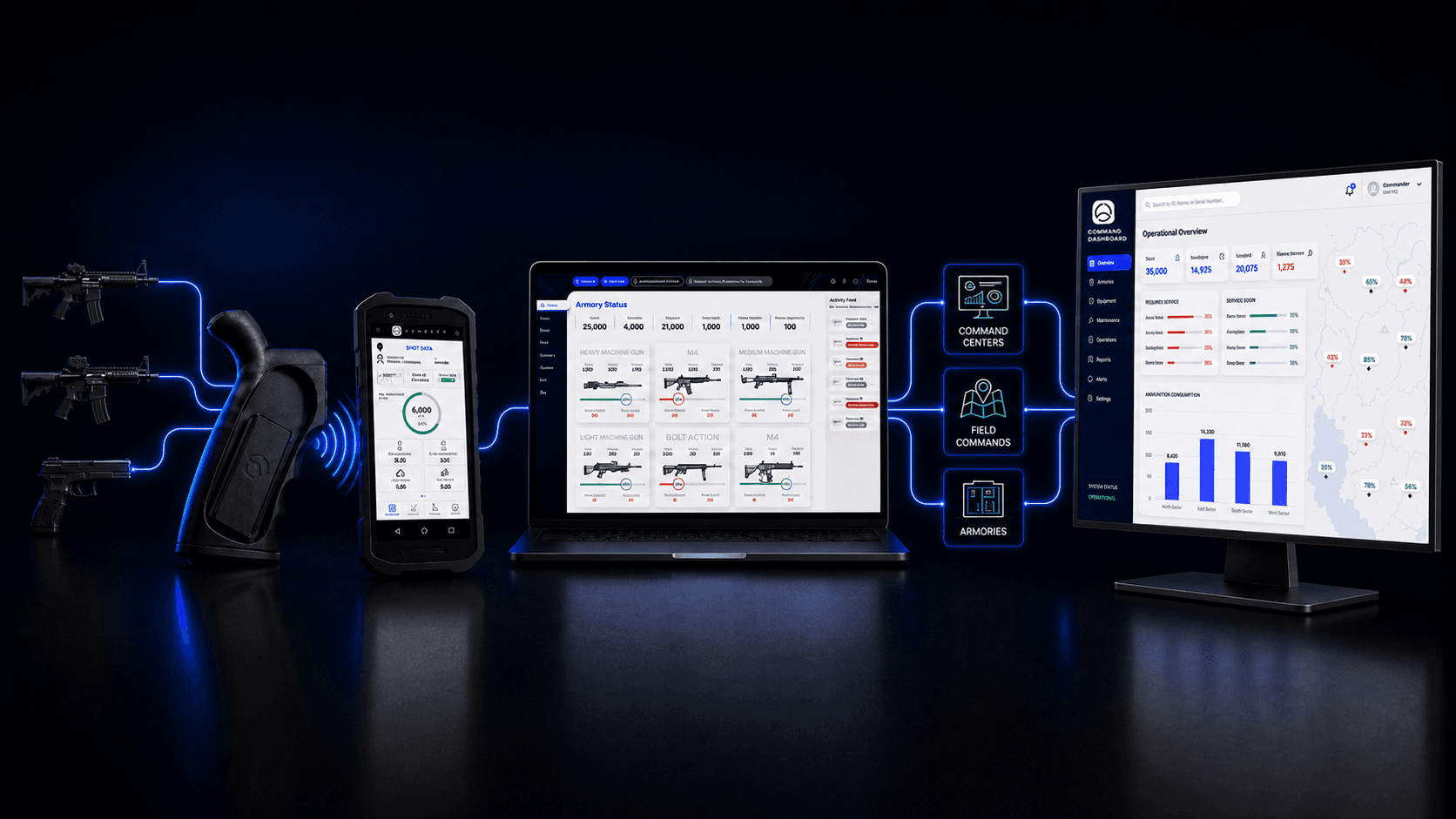
One operational picture.
The intelligence chain
It isn’t a loop, it’s a climb. Every link adds data and widens the scope: a single round fired, then a weapon’s full history, then an armory’s inventory, then the entire organization at a glance.
// 01 · Weapon
A weapon in the field is blind
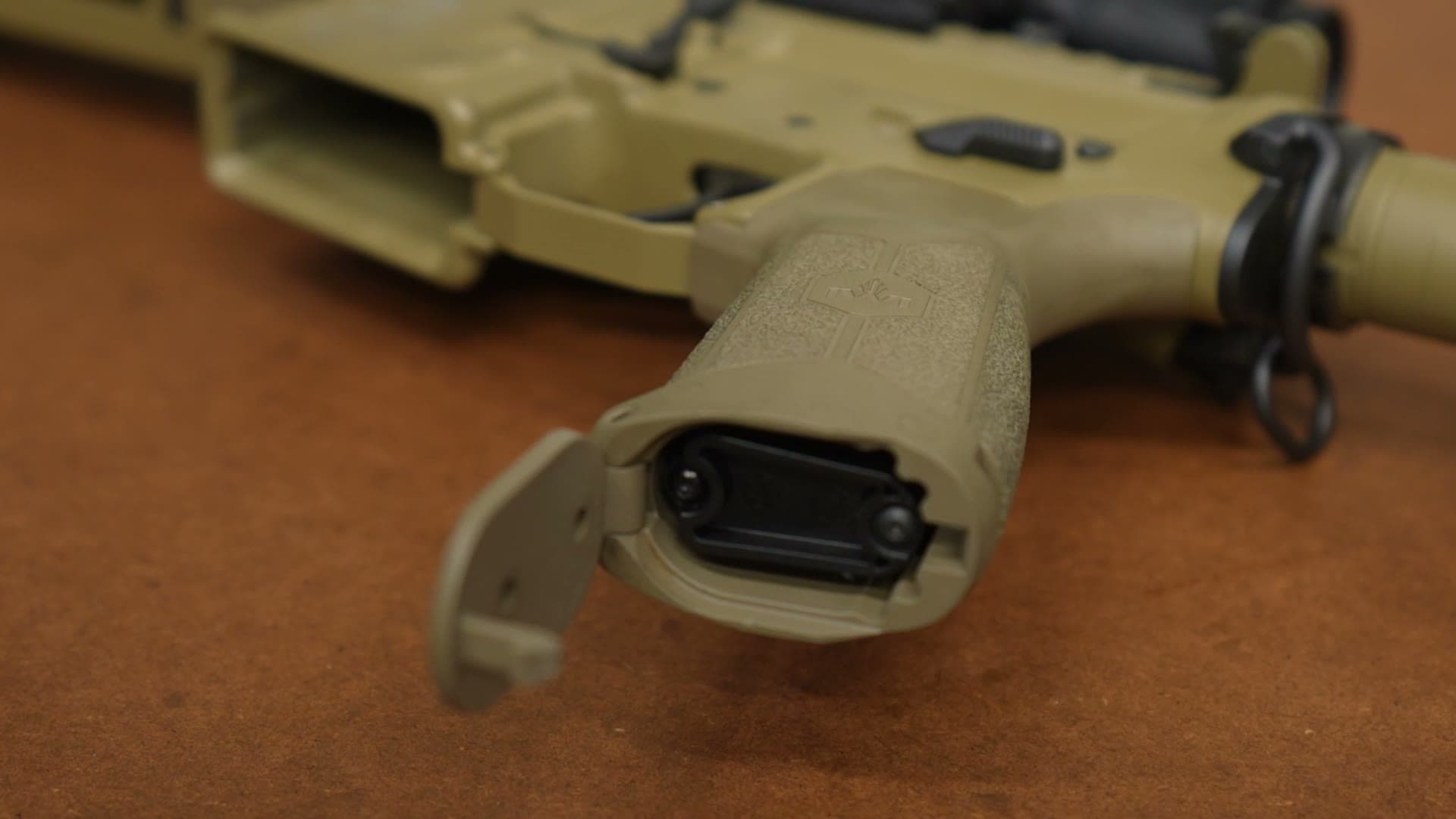
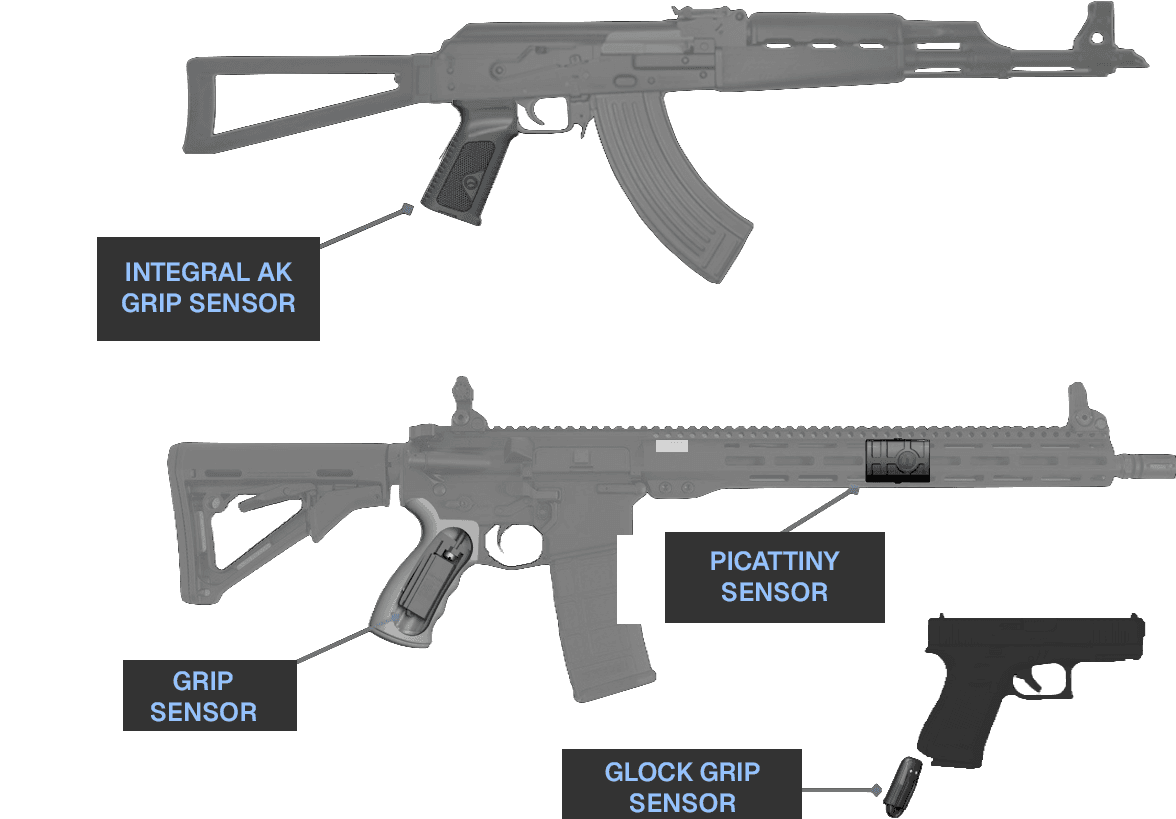
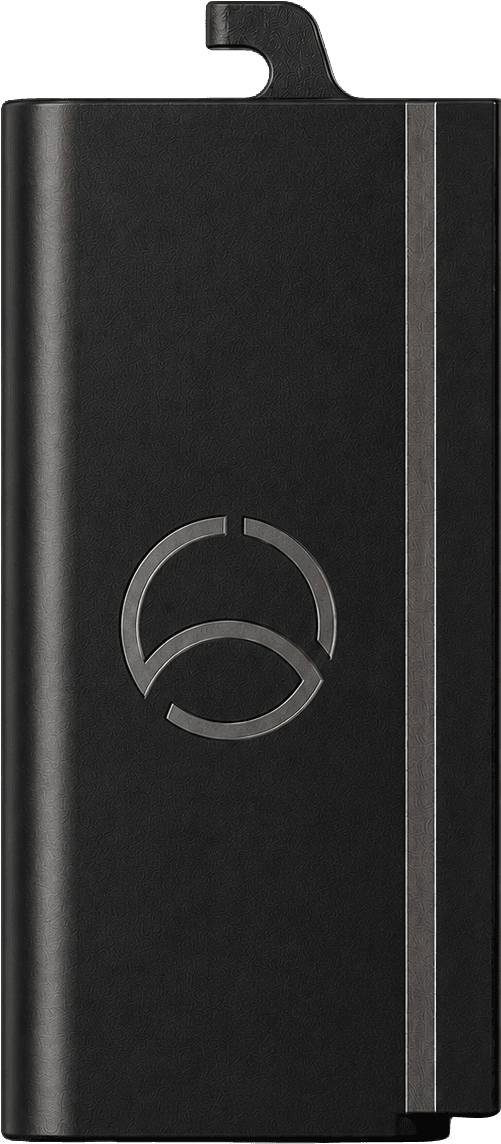
On its own, a weapon carries zero data, no round count, no service history, no chain of custody. This is the starting point: a ruggedized sensor mounts to the grip or rail and the record begins the moment it leaves the rack.
- Grip / rail
- Automatic
- Zero
We close the gaps that break readiness.
Control · Know · Decide
Edge sensors log every round, condition and fault the instant it happens, replacing unreliable human reporting with ground truth from the weapon itself.
- Pen, paper and manual counts
- Status that is always outdated
- Field failures found too late
Digitalization replaces logbooks and spreadsheets: every weapon, part and round tracked, reconciled and serviced on schedule, on-prem or connected.
- Thousands of hours lost to manual inventory
- Analog processes, slow and hard to audit
- Weapons worn out with no lifecycle tracking
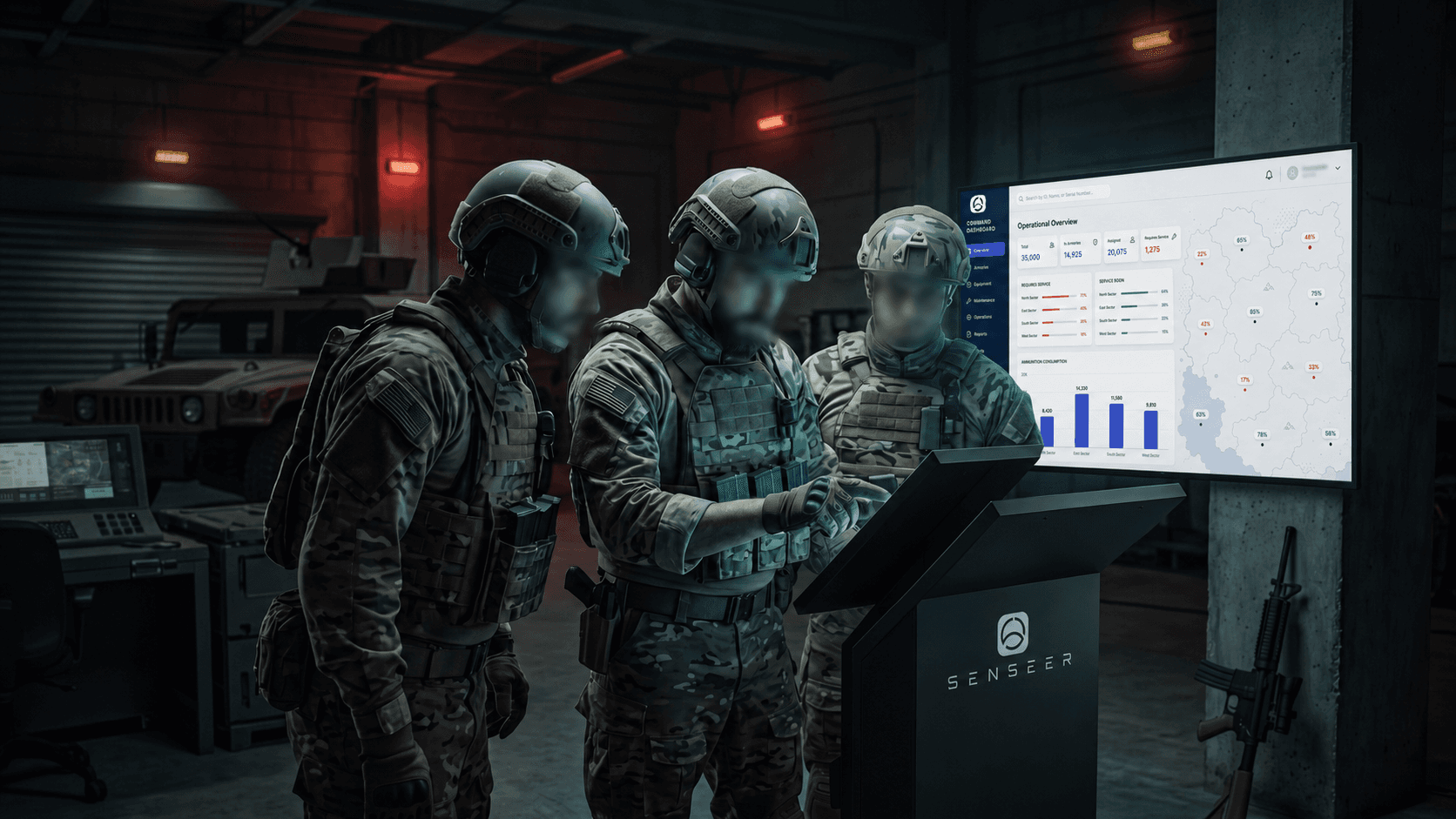
Live readiness, real ammunition consumption and accountability across every unit, so planning and procurement run on fact, in seconds.
- No unified picture across units
- Ammunition over-ordered, blind to real use
- Budgets built on estimates, not data

// FAQ
Armory management, answered.
A weapon management system is software that tracks every weapon in a fleet: where it is, who holds it, how many rounds it has fired and what maintenance it needs. Senseer feeds it directly from weapon-mounted sensors, so the data is measured, not estimated.
Every check-in and check-out is logged automatically at the armory, replacing clipboards and head-counts. Armorers see live inventory, round counts and maintenance state for every weapon, and command sees readiness across the fleet.
Yes. The platform tracks rounds fired per weapon and per part, and flags parts approaching service life before they fail. Maintenance becomes scheduled work driven by real usage instead of reactive repairs.
Yes. Sensors store shot data on the weapon and transfer it over NFC at the armory reader. The weapon itself emits no RF, which keeps operators silent in the field.
Inside your perimeter. Senseer deploys on your own infrastructure, on-premise or fully air-gapped, and your organization owns data residency end to end.
You track barrel life by recording the exact number of rounds each barrel has fired, since round count is the direct driver of barrel wear. Senseer’s weapon-mounted sensors log every round automatically and attribute it to the specific weapon, so the platform maintains a running, per-weapon round count that armorers can pull instead of relying on estimates or paper logs. That count feeds directly into maintenance scheduling, flagging weapons approaching their service threshold before a failure occurs. The wear threshold itself depends on the weapon and the operator’s own maintenance doctrine, and Senseer supplies the exact usage number that doctrine is applied against.
The right time to replace a rifle barrel depends on the weapon and the operator’s own maintenance doctrine, since wear thresholds vary by platform, caliber and use case. What Senseer provides is the input that decision needs, an exact, automatically logged round count for every weapon in the fleet, rather than an estimate reconstructed from memory or a paper log. Armorers can flag a weapon for inspection the moment it crosses their program’s own threshold, and command gets visibility into which weapons across the fleet are approaching that point. This turns barrel replacement into scheduled maintenance driven by real usage instead of a guess.
Standards & references
- 1.AR 700-28, Ammunition Management, U.S. Army Publishing Directorate
- 2.TC 3-20.40, Training and Qualification, Individual Weapons, U.S. Army Publishing Directorate